
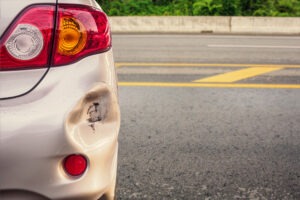
Drivers in Ohio are legally required to stop after an accident and exchange important information such as names and insurance details with other motorists who were involved in the crash. If a driver fails to take these steps and instead chooses to leave, they can be convicted of misdemeanor or a felony. Despite these serious repercussions, there remains a concerning number of hit-and-run accidents in not just Springfield, but across Ohio.
Car accidents can be incredibly traumatic experiences, and navigating the aftermath of a hit-and-run incident can add extra stress for victims like you, who may be dealing with injuries and property damage. But you don’t have to go through it alone. An experienced Springfield car accident lawyer can help you investigate your accident and recover the compensation that you deserve.
What You Can Do If You’re the Victim of a Hit-and-Run
Unfortunately, a number of drivers who commit hit-and-runs are never found, but a meaningful share do get identified, and there may be more helpful clues than to finding them than most people realize.
| Evidence | How it can help |
| Paint transfer on your vehicle | Exact shades or unique paint colors can narrow down manufacturer, model, and year range of the vehicle. |
| Broken parts left at the scene | Molded part numbers can identify the vehicle. |
| Glass and lens fragments | Headlight and mirror assemblies are often model-specific. |
| Your vehicle’s damage geometry | Height, angle, and impact profile can narrow the vehicle type. |
| Nearby cameras | Business, residential, doorbell, and traffic cameras may have captured your accident. |
| Witness recollection | Partial plates, color, direction of travel may be noticed by those who witnessed the accident. |
| Your own vehicle’s data | Recorded routes, speed, and timestamps can provide valuable information. |
It may be beneficial to gather and preserve these pieces of evidence as soon as you’re able to, as many of these factors may become unavailable with time. Camera footage, for instance, is often only retained for a certain number of days before the memory is wiped to make space for new security recordings.
When a negligent driver flees the scene and leaves you to deal with the aftermath alone, it can appear as if your options are limited. While it’s true that this can add a layer of complexity to your accident claim, your hopes for recovering damages are not automatically lost.
There are a few helpful things that you can do after a car accident, even if the accountable driver is not immediately found:
- Do not repair or wash your vehicle yet. Paint transfer and damage geometry are physical evidence, and the single most common way this evidence disappears is that the victim gets their car fixed. Photograph it thoroughly first and tell your insurer you need it preserved for inspection.
- Collect every fragment from the scene — even pieces that look like debris. Part numbers are molded into plastic.
- Ask for camera footage within days, in writing. Businesses, homes with doorbell cameras, and anyone with a view of the route. You do not need a lawyer to make that request, and a written request that arrives before the retention window closes can give your case a beneficial edge.
For a free legal consultation with a Springfield hit and run accident lawyer
 (614) 545-3930

How Fleeing Drivers Can Be Discovered
Even if a vehicle immediately leaves after an accident, there are a number of ways or situations that can eventually lead to their identification, and being aware of them can help tell you where to push for further inquiry.
- The vehicle comes in for repairs somewhere: A car with collision damage is conspicuous, and it will often go to a body shop, parts counter, or salvage yard. Canvassing repair facilities and parts orders in the area is one of the most productive investigative routes, but it can be time sensitive; once the repair is done, the evidence disappears.
- Drivers frequently file their own claims: Someone who flees still has a damaged vehicle they want fixed, and a claim filed with their own insurer creates a record.
- Camera coverage along the escape route: Helpful footage doesn’t end at the scene. The at-fault vehicle had to go somewhere, and cameras along the plausible routes could pick it up.
- Automated plate readers: In areas where these are deployed, plate readers can capture vehicles that were in an area during a specific time window.
- Community circulation: Local social media groups and neighborhood networks are unofficial pathways that can help surface damaged vehicles.
- A partial plate goes further than people expect: Even three or four characters, combined with make, color, and model year range, can narrow a registration search substantially.

The Last Thing You Should Worry About Is How You’re Going To Pay For Your Medical Bills.
(614) 545-3930
What Changes If the Driver Is Found?
Finding the at-fault driver is the preferred outcome of a hit-and-run investigation, and it can change your case in a few different ways:
- Their liability coverage becomes available. That is usually the largest practical change, because it replaces or supplements a claim against your own policy, and it means your own coverage isn’t the ceiling.
- A criminal case opens. Leaving the scene of a crash involving injury or damage is violates Ohio law (ORC § 4549.02 and 4549.021), and the severity of their offence depends on the degree of harm they caused.
- Restitution may be ordered in the criminal case. This is a court order to reimburse the victims for their financial loss. This is separate from any damages recovered in a civil claim, and being given restitution does not preclude you from pursuing a civil case.
- Negligence is already established. A legal principle in the United States dictates that the violation of a law automatically establishes negligence, an element which is vital in a civil claim. This aspect alone does not win your case, but it can be beneficial to getting injury victims the compensation they deserve.
But just because the at-fault driver is identified does not guarantee that they’re insured. According to the Ohio Department of Insurance, as many as 15% of Ohio drivers don’t have valid car insurance, which can be a strong motivator for why they ran in the first place.
What Happens If They’re Never Found or Found with No Coverage?
If the at-fault driver does not have insurance or is never found, then your own insurance policy benefits may play an important role in covering costs for car repairs, medical costs, and other financial losses.
For those who have uninsured motorist (UM) coverage, this can step in to help cover these costs, but this will depend on the victim’s individual policy. UM coverage is neither required by Ohio law nor automatically offered by insurers, and as a result, some drivers may not be aware if it’s missing from their policy.
Keep in mind that UM claims carry deadlines that may be shorter than the statutory deadline for raising a civil claim. It’s better to take a look into your coverage and find out your UM limits and coverage sooner rather than later.
We Will Be
There To Help
You All The Way
About Springfield and Clark County Specifically
The I-70 and US-40 corridor
Springfield, Ohio sits between two larger metros on a major east-west route, which produces a meaningful volume of through traffic. A vehicle that flees onto I-70 is out of the county in minutes, which is why camera coverage along the route out matters as much as coverage at the scene.
US-40, the old National Road
This road carries local and commercial traffic through a series of small communities, each with its own responding agency such as the Springfield Police, the Clark County Sheriff, or the Ohio State Highway Patrol. Pay attention to which agency responds, as it determines where the accident report lives and who is running the investigation.
Shift-change traffic
Springfield’s manufacturing and logistics employers produce concentrated traffic at shift changes, including at hours when a crash may have few witnesses. If your crash happened near a shift change, the pool of potential witnesses may be larger than it looks, and finding them is a canvassing question with a short window.
Rural county roads
Areas outside the city have limited camera coverage and fewer witnesses, which shifts weight onto the physical evidence — paint, parts, and damage geometry — and makes preserving your vehicle more important.
Where the case goes
A civil claim goes to Clark County Court of Common Pleas; a misdemeanor hit-skip charge to Clark County Municipal Court; a felony charge to Common Pleas; a claim involving a state route or state agency to the Ohio Court of Claims.
The First 72 Hours
- Do not repair or wash your vehicle. Photograph the damage and any paint transfer in detail, from multiple angles and in good light.
- Collect and bag every fragment from the scene. Don’t discard anything.
- Request camera footage in writing from every business and residence with a view of the scene and the likely route out.
- Write down everything you remember about the vehicle — color, body style, damage, partial plate, direction. Memory degrades within days.
- Get the crash report. Note the responding agency and the assigned investigator.
- Seek legal guidance. A Springfield car accident lawyer can help you take action against the driver whose negligent actions caused you physical, monetary, and emotional suffering. They can help guide you through the next legal steps and answer questions about what comes next.
How the Fitch Law Firm Can Help
Because The Fitch Law Firm believes in making justice more accessible, our attorneys work on a contingency fee basis, which means our clients will pay nothing out of pocket. In fact, they pay nothing unless we’re able to secure compensation for them.
We understand how overwhelming it can be to attempt navigating the complexities of the legal realm when you’re dealing with treatment, medical costs, and lost income from time off work. But you don’t have to manage everything alone. Our legal team can do the legal heavy lifting for you so that you can focus your energy on recovery.
At The Fitch Law Firm, we can:
- Investigate the hit-and-run collision
- Help gather police reports and other relevant evidence
- Work with medical professionals to document injuries
- Handle uninsured and underinsured motorist claims
- Negotiating with insurance companies
- Identify liable parties
- Assess your potential recoverable damages
Call today at (937) 247-6521 for a free legal consultation and learn more about the options available to you.
Frequently Asked Questions
How do hit-and-run drivers actually get identified?
Usually through one of a few routes:
- Paint transfer on the struck vehicle can indicate the manufacturer and color code, narrowing make and model.
- Broken parts left at the scene carry molded part numbers.
- The fleeing vehicle has to be repaired somewhere, so canvassing body shops, parts counters, and salvage yards is productive but time-limited.
- Cameras along the escape route often matter more than cameras at the scene, and drivers who flee frequently file claims with their own insurers, which creates a record.
If they catch the driver later, does that change my claim?
Yes. Their liability coverage becomes available, which usually means your own policy is no longer the ceiling. A criminal case opens under Ohio’s hit-skip statutes, and restitution may be ordered, though restitution is generally limited to economic loss and does not replace a civil claim. The driver’s decision to leave also becomes part of how the civil case is evaluated. But remember: even when a driver is identified, they may not be insured, since many drivers flee precisely because they have no coverage.
They found the driver but he had no insurance. What now?
Your own uninsured motorist coverage generally applies, which is the same as if he had never been found. Being identified does not create coverage that does not exist. UM claims carry deadlines set by your policy contract rather than by statute, and those can be shorter than the deadline for filing your accident claim. Report the crash to your own insurer promptly even if the at-fault driver hasn’t yet been found.